Showing posts with label MTConnect. Show all posts

Thursday, 19 November 2015

XBOX as PLC - Is it Feasible?

On November 9. 2015 Frank Schliephacke, a Senior Engineer at Westinghouse Electric Company on LinkedIn Groups, posted the following question. He wrote:
Given the evolving Industry 4.0 and IoT the XBOX is the ideal hardware: Single type, off the shelf, cheap, long live cycle. Thus what problems do you see? 
For the actual thread I refer to, see https://www.linkedin.com/grp/post/68581-6069194159758016514

To delve into this question a bit deeper, some definitions may be in order...

What is Industry 4.0?

As manufacturers look to the future, they are examining how advanced information and communication technologies can boost value creation. In Germany, this development is called "Industry 4.0." Similar initiatives have been launched in other European countries, the U.S., China, and elsewhere. Industry 4.0 aims to achieve production-related advantages by creating a networked, flexible, and dynamically self-organizing manufacturing process for highly customizable products.

Over the next 15 to 20 years, it is expected to be accompanied by a paradigm shift that could justifiably be called the fourth industrial revolution. The result will appear to be revolutionary from today’s point of view, but ultimately it will involve a large number of development steps in a process of evolution.

 The first industrial revolution was triggered by the invention of the steam engine and the mechanization of manual work in the 18th century. The second revolution was made possible by the introduction of electricity and involved the use of mass production techniques in the early 20th century, and the third was ushered in during the past few decades by electronic systems and computer technologies for automating manufacturing and finishing processes. Now the rules are changing again in many sectors, due to the digitization of the entire value chain and continuous and pervasive access to a comprehensive range of information in the form of virtual models, data, and knowledge.


(Source Siemens - see http://www.siemens.com/innovation/en/home/pictures-of-the-future/industry-and-automation/digtial-factory-trends-industry-4-0.html) The world of Industry 4.0 is built upon a new area called Cyber-Physical Systems I might add which has sensors, connectivity and local decision making at its core - perfect for the Industrial Internet of Things (IIoT).

What is the Internet of Things (IoT)?

To quote Greg Goodwin from LNS Research who defines Internet of Things as:

The IoT refers to the network or networks encompassing the use of standard Internet Protocol (IP) technologies to connect people, processes, and things to enable new cyber-physical systems. The Industrial IoT should be understood as a subset of the broader IoT, where these connections exist mainly to produce physical goods for the marketplace as well as to maintain the physical assets of production.

Whereas previously, the Internet has generally been understood as comprising a network of computers, the adoption of mobile, embedded sensors, and other technologies is expanding this definition to include people and objects outfitted or embedded with smart sensors. As this trend grows over time with improved technology and less expensive hardware, the number of connected “objects” will trend toward all-encompassing. By 2020, this network is expected to include:
  • Devices
  • Sensors
  • Instrumentation
  • Materials
  • Mobile and Fixed Assets
  • Products
  • People
Today the majority of manufacturing companies have a legacy of information and automation technology solutions that have been implemented over several decades, with most of these solutions built on a mix of open and proprietary communication protocols that were the industry standard at the time of their development. As these systems do not easily inter-operate with one another, this communication sticking point is a major roadblock to actually realizing Industrial IoT capabilities, and why the creation of an IIoT Platform that can integrate the information from these legacy systems is necessary.

The IIoT Platform is a future looking framework for categorizing the technology capabilities that are necessary to deliver Smart Connected Operations, Smart Connected Assets, and the Smart Connected Enterprise. A growing area of market activity, the progress and development in constructing the IIoT Platform is something we’ll be talking and blogging about frequently as time moves on.

For manufacturers to capture the true value of the IIoT LNS Research sees four main buckets of capabilities that are critical in enabling the Industrial Internet of Things platform:
  • Connectivity: This includes all necessary hardware and software to network within the plant and the enterprise, standards for integrating machines, clouds, applications and the technology for quickly and efficiently managing devices, moving data, and triggering events.
  • Cloud: Includes all of the various clouds across an enterprise to implement computing and storage capabilities wherever they are most needed—at the edge, within the plant, at the enterprise, or outside the firewall
  • Big Data Analytics: Includes the use of a broad set of statistical and optimization tools to cleanse, monitor, and analyze both structured and unstructured data for enabling unprecedented insights
  • Application Development: Includes the needed tools for quickly and easily creating new mashup software applications that leverage all other areas of the IIoT platform as well as quickly and easily moving existing legacy applications on top of the platform as well.
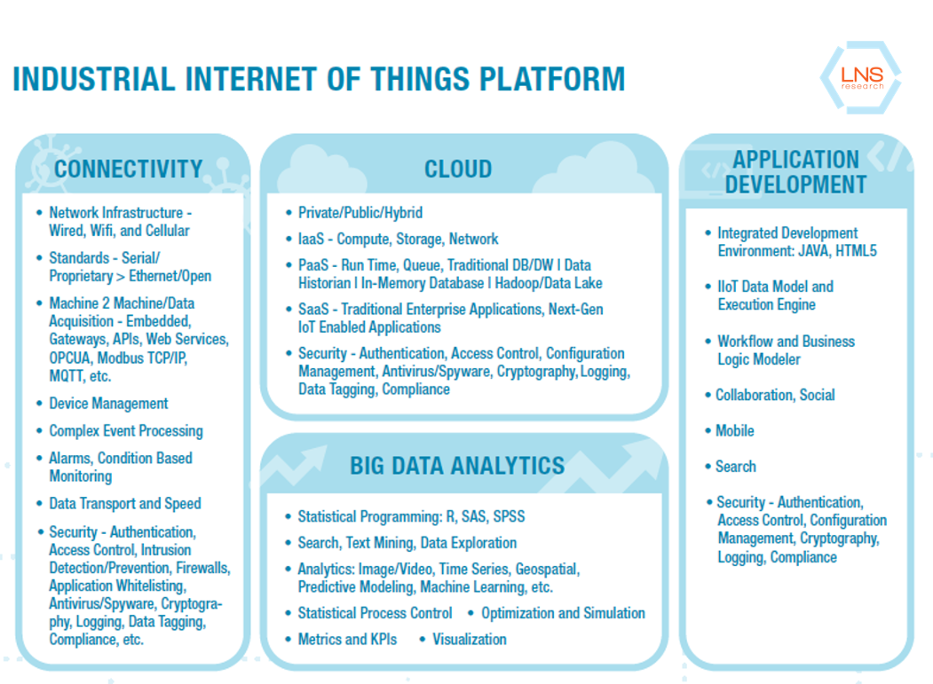
See: http://blog.lnsresearch.com/what-is-the-industrial-internet-of-things-iiot-platform    

Points to Ponder:

Martin Schlinder in his 02.25.2015 iBadge Infineon Article quotes market research firm Gartner in 2015 should be in the retail segment 2.9 billion networked objects in use. By 2020, the number of networked devices is expected to increase to over 13 billion.

In Summary:

As the price of hardware drops, the level of inter-connectedness rises, the need for mass customization, the tolerance for waste is zero and level of velocity on the factory floor increases, I can see that mass produced gaming boxes like XBOX will have a place over time on the factory floor, the Smart City, Home Automation and IIoT world in general.

In the responses that Frank got to his original question, some pointed out that PLCs need to be robust, documented, stable, available for the long haul and pass certain certifications - all good points. But the old world of PLCs is daily being bombarded by low cost suppliers like Automation Direct and now Arduino and Rasberry Pi - so the writing is on the wall that it will come... 

My posted answer today to Frank's XBOX as a PLC question was as such...

Use of COTS hardware is a driving force these days on the factory floor. Most PLCs do not do mission critical systems, and even in the PLC world there are special categories of PLCs just for safety and harsh environments.
The real question here is with the advanced math/graphics processing, the economies of scale in production, the native networking and the backing of Microsoft (yes, I have asked them personally not 6 months ago) - the use of XBOX and other Microsoft products on the factory floor is something to be considered.
For my part Frank, I think it should be... Microsoft has long been interested in the factory floor even supporting the OMAC (Organization for Machine Automation & Control see http://www.omac.org) group of which I was a part in the Global HMI Sub-Committee. Today the fruits of that original OMAC XML schema have become MTConnect (see www.mtconnect.org). 
Use of open source hardware will come, as will leveraging advancing in gaming technology on the factory floor I predict. Look at the Digital Manufacturing and Design Innovation Institute (http://dmdii.uilabs.org/) in Chicago that my friend Dr. Dean Bartles is running for where all this is going... exciting times!
One final thought ... my friend Richard (Dick) Morley (the inventor of the PLC) once challenged me to make manufacturing into a game somehow - today I call this "gamification" and we are seriously doing research to make that reality...

In the end, I bet the XBOX and its gaming brethren could help the manufacturing process more than you know ...

Wednesday, 24 September 2014

Industrial Equipment & Network Security - A Growing Concern

Increasingly our industrial world is adopting Information Technology (IT) advances such as networking, remote control via the web, mobile interfaces, 802.11 wireless, USB support,  and now cloud based applications in the race to stay ahead in this competitive world. This application of technology may be coming a a cost of vulnerability and we need to look at this.

At the recent International Manufacturing Technology Show (IMTS 2014) in Chicago, exhibitors showed how they could leverage every advance in the IT world on to the factory floor. At the leading edge 100,000 sq ft DMG MORI booth, amazing new controllers and machines with remote OEM support options and high tech interfaces made in their new Davis, California plant were highlighted.

Following DMG MORI's lead, every manufacturer wants to reduce costs and yet enhance customer service - and leveraging IT is a great way to do so. That said, this openness cannot be done at the cost of making the system less secure and opening up the potential for a cyber attack and disaster.

Anyone in the defense industry (especially in the US) has heard of the International Treaty of Arms Reduction (ITAR) and the many security requirements that this program entails. Right now security on the factory floor is focused on perimeter control (network, magnetic card locks, video surveillance, etc) and the human element (checking out each worker and contractor). This may not be good enough in the future - we must get security into each machine.

The opportunity here is to investigate Machine to Machine (M2M) security systems - having part programs secure right to each machine (and perhaps once in them). Machine protocols like open source XML-based MTConnect need a secure version to be considered for ITAR or even cloud-based machine monitoring and Overall Equipment Effectiveness (OEE) programs.

In the days to come, Nexas will be looking into just what would be needed to provide secure factory communications to enable mobile, wireless and cloud-based applications. If factory floor network security is not yet a concern - I think it should be. This may indeed be the "next big thing" in the manufacturing sector worldwide...


Reference Links You Should Check Out...

1. 2014 Kaspersky Industrial Security Review
2. LoJack System for Cargo
3. IMPERVIO Information Rights Management System
4. Finding Your Cyber-Security Weak Spots
5. Tofino Factory Automation Security

Friday, 14 September 2012

Manufacturing Today - Walking IMTS 2012 in Chicago

Well I just got back from the International Manufacturing Technology Show (IMTS 2012) in Chicago. What a spectacular show with over 1900 exhibitors, miles of isle ways, every building used at McCormick and a great crowd of people. IMTS comes around once every two years on the even year, and the last one was just before the financial meltdown that no one seemed to see coming in Sept 2010. This week over 100,000 manufacturing people came to see what was new, and where they could improve their operations.

My observations are as follows:

1.    Manufacturers are gearing up these days for "re-shoring," where jobs subcontracted to China and other low-cost "off-shore" countries are coming back. As such, they need to seek out new technologies to stay competitive and nimble. The use of technology, automation and the greater leveraging of information technology is clearly evident. From small inverted hexapod mini-assembly machines at the Fanuc FA booth in the South Hall, to the half dozen folks selling tooling vending machines in the West Hall, we see a drive to automate everything.

2.    The East Hall was filled with software technology providers that are focusing on Overall Equipment Effectiveness (OEE), real-time machine monitoring, energy management, CAD/CAM and better MES/ERP integration. A common theme was the adoption of MTConnect, but today it has more software applications than native machine types. The complaint from these software vendors was that people know they need information, but are wondering how to get the connectivity and grappling with the user interface. From bar code readers to hand held terminals, touch screens to the leveraging of optional machine protocols - everyone knows that the last few inches is where the MTConnect movement will need to focus to gain greater traction.

3. The South Hall had spectacular million dollar booths from industry veterans such as Mazak, Makino, Hyundai, Hurco, Haas, OKUMA, Methods, MAG and so on. It is not every day that you see two story booths, bars serving alcohol, robots moving train wheels in a Flexible Manufacturing System (FMS) cell. It was a feast for the eyes and probably the most advanced display of manufacturing ever - and I have been going for 22 years!

4. The North Hall had smaller booths with EDM, grinding, saws, DNC, tool management, metal suppliers, you name it - the entire manufacturing world was represented. A sales rep from Hyd-Mech, a company in the fabricating cut-off saw business, admitted to me that IMTS is a place you have to attend, but for them they get 3 times the sales from their specialty FabTech Show in Vegas. That said, he admitted if you don't come, your customers and competitors will assume you are out of business. So IMTS is a place to be seen and catch up with the industry for sure.

5. The emerging technology area still had an MTConnect booth staffed by TAG and Institute staff members like Paul Warndorf - but this is probably the last year for it as it is 6 years old now. Some new applications using iPads were shown by Joel Neidig from ITAMCO and Ken Tock from MacKintock demonstrated their iPad and HMTL5 dynamic web-based MTConnect factory floor emulation and data feed which was impressive. John Turner and Will Sobel, two of MTConnect's main technical architects, took the time to explain to Paul Hogendoorn, an electronics entrepreneur and tech writer with Manufacturing Automation in Canada, what MTConnect's main value equation was. In short, MTConnect is an open web-centric schema that acts like a common dictionary for the manufacturing connectivity world. That means developers and users always know what and where data can be found in any MTConnect appliance and the simple, expandable common interface that will enable future plug n' play integration economies. In simple terms then, gone are the days when you were locked into poor communication options, expensive protocols for each and every machine, or heavy costs to migrate to new technologies as they came along. Once again, the industrial democracy is demonstrated at its' best here and we all benefit. The extensible open aspects of MTConnect are now using "Read/Read" to safely get dissimilar equipment talking fast. As an electronics developer, and former manufacturer himself, I think that Paul "got" the MTConnect value equation and realized that the next big hurdle is legacy connectivity.

6. It was great to connect with vibrant Diane Pepi at Methods Machine about advances in Yasnac third party products. Nexas is looking to soon supply the Yasnac J300 memory module and Methods is the Matsuura dealer in North America that focused on Yasnac controls before they stopped producing. That said, it is clear that the memory upgrade and DNC market are soon to be eclipsed by technology that makes every machine a node on the corporate network. Jim Brown from Makino pointed out that all his machines have Ethernet connectivity, but it is the old ones they worry about as more and more clients see the benefits of inter-machine inter-connectivity on all their machines Makino or not. While we waited for MAG VP Jeff Price, PJ pointed out to me late on Tuesday afternoon that all the machine monitoring solutions they sell still need better legacy connectivity. So much can be done to help operations and plant floor visibility if we can just elegantly bridge the last few inches - a theme we have heard before. With Dave Edstrom, Chair of MTConnect, calling for abstracts by Oct 1 for the next MTConnect [MC]2 Conference in April 10-12 at the Hyatt Regency Hotel in Cincinnati - this topic needs to be addressed before then.

7.   Finally the theme in the emerging technology booth was all about additive technologies. Teams converging on a trick car design in this area also highlighted that global engineering teaming and skunk works will be a future reality. Solid modeling seems to a standard  on the all the CAD/CAM software offerings in the East Hall as the world gets robots and automated handlers to reduce waste, shorten development time and save energy for better sustainability and cost control.

In summary, IMTS 2012 was for me a great eye opener as to the advanced state of manufacturing. I found the attendee mood was upbeat with serious buying on people's minds. We seem to want to do more with less, and do it faster than ever. Sophisticated electronics control systems are in almost ever single manufacturing tool these days, and the next drive will be to interconnect those islands of automation. I predict that when one looks at the cyber factory floor of the near future, they will realize that it is really one big machine with many connected parts - all connected with a shop floor nervous system.

In short, I foresee that machine tools will soon just be like USB metal printers that plug into the system, mount and run together easily in the very near future...


Tom Gaasenbeek - Find me on Bloggers.com

Tuesday, 19 June 2012

MTConnect Day 1 - Legacy Connectivity Status

John Turner from  FAC&T talked about the legacy machine integration challenge. A call for more MTConnect Legacy Connection devices was emphatically made. The Tipping Point for MTConnect will be related to this last few inches of connection into the machine tool. Right now the following connection types are:


Native Type Machine (20-30% of Machines)
  • easiest to implement
  • machine tool builder - product source and support
  • Limited Hardware/Software Issues
Translation Type Machines (10-20% of Machines)
  • control Builder or 3rd party - product source
  • Hardware Issues - Communication Board on Control, PC to Host Adapter/Agents
  • Software Issues - No Commercial Adapter/Agent Available, Software confguration to data source
Connection Unit Type Machines (50% or More of Machines)
  • Works with any machine
  • 3rd Party - Product Source & Support
  • Power Line Monitoring and I/O Interface Types Available
  • Technical Issues
    • Installation & Wiring (I/O Type)
    • Power Profile Learning (Power Line Type)
Other Lessons:
  • Shops want a guide to determine how their machine can connect to a network using MTConnect?
  • What information can I get from the shop floor and can O get the data I need from my machine?
  • Most requested information
    • Process Visualization/Production Dashboard
    • Machine/Spindle Utilization
    • Maintenance
    • Tooling
    • Data logging
    • Part program ID, operator ID and part ID
Recommended Enhancements to Connectivity Guide
  • Machine Data sheet
    • Add space to capture "Work Area (Machining cell)" associated with a machine
    • Add space to capture "MTConnect connection Type" for a Machine
    • Add space to Factory/Site to support Multi-Site Operations
    • Add space to capture Controller or HMI Operating System versions
  • Overall Readability/Effectiveness of the Guide
    • Improve readability by rearranging sections and tailoring language to the audience
    • Add recommendations on what to monitor, perhaps based on what has been learned in the field
    • Include data types used by each of the known software solutions 
Call for A NTMA Starter Kit

Pat Walsh, VP of the NTMA, called for an easy to install "MTConnect Starter Kit" made available to the National Tool Manufacturing Association 1000 members. We need a standardized kit for machines using MTConnect to a dashboard. Looking at October 24-28, 2012 at the NTMA Conference and then again at the MFG Meeting March 5-10, 2013.

The kit must be easy to install, work on a wide range of machines, attractively priced and scalable.

What do the NTMA membership want to see on the dashboard?
Pat responded -> is it running, parts count, what part is running, machine utilization, etc...

Implementation Note

Nexas Networks is focused on economical MTConnect shop floor connectivity but we have added in embedded DNC. Our Nexas DCAM ideas that run under the DNC engine enable very low cost MTConnect implementations which may be perfect for the NTMA starter kit idea. The software will be the differentiator in the end, but the price has to be economical and let the software application vendors need to compete for the final sale to the NTMA member.

Thursday, 20 October 2011

MTConnect - A New World of Factory Floor Connectivity is Here

Submitted Online: Oct 20, 2011 by Tom Gaasenbeek 
Event: Call for Speakers - 2012 SME Annual Conference in Cleveland June 3-5
 
Biography - Who Are You:

As the CEO of Nexas Networks Inc., I am focused on providing Computer Integrated Manufacturing solutions. Since 1992, I have been striving to optimize manufacturing operations and provide innovative solutions for CNC control networking - first with Memex, then a public company called e-Manufacturing Networks and now with Nexas. Over 10 years, I was instrumental in developing the OMAC XML Schema for inter-machine connectivity - today that is a reality with MTConnect and I am excited to say ready for adoption. The world of Machine 2 Machine (M2M) connectivity is about to take off and we are dedicated to making this happen with MTConnect.

Why this topic is important to this audience: Please provide any history, trends, etc. that make this presentation vital to current users or new users of the technology. *

Manufacturers today are in an intense battle - competing 24/7 with every corner of the world. As such, they know that real-time information and nimble systems are needed to profitably respond to market. Expectations are higher and so it is necessary to have everything under control - this needs real-time data gathering. Excellent communication is at the heart of manufacturing today. Legacy machines need a common language to talk and with MTConnect - an open source XML schema is now available with legacy machine adapters - to make this feat happen. This talk is about sharing the exciting world of MTConnect and the advances in Machine 2 Machine connectivity. 

Abstract: Please provide a 100 to 200 word abstract describing your presentation. Please be specific as possible as to what you will discuss—technologies or strategies covered, case studies cited, etc. *

1. The Case for M2M Communications - After a brief intro, I intend to start the presentation with a definition of M2M and current state of communications on the factory floor. We all know that real-time information is needed to make a profitable company, but rarely is the "automation" actually "automated" and communicating easily. JIT needs real-time information as do many other systems - but up to now that has been hard to achieve. Discussion here will highlight the cost of legacy systems and the desire to bridge this gap sooner than later.

2.  Factory Floor Communications - A survey of the various silos of data gathering such as Quality, Production, DNC, MES, MRP, ERP etc will highlight the challenges manufacturers have had over the years with management and the application of information technology on the factory floor. A consolidated approach is need - the stumbling block has been a common language. The Open Modular Architecture Controls (OMAC) group addressed this in the late 1990's, but it was not until MTConnect in 2007 that the movement gathered steam with the sponsorship of the American Machine Tool Association.

3. Introducing MTConnect - The Standard for Real-Time Connectivity - Today MTConnect offers a universal connectivity option for almost all factory floor equipment and instrumentation. This ease of use and implementation - like OPC was in the process control world - will usher in new capabilities of interactive, responsive controls, nimbleness in operation and vigilance. 

4. Implementation of MTConnect - Today & Tomorrow - As a visionary and founder of this movement, I see an exciting future for the adoption of MTConnect on the factory floor. From Overall Equipment Effectiveness to Lean Manufacturing, the benefits of a common language with legacy machine support will help today's manufacturers survive and thrive in this every-changing world.


Tom Gaasenbeek - Find me on Bloggers.com

Thursday, 3 March 2011

CIM, So What?

Computer Integrated Manufacturing (CIM) is a relatively old term, but is not really heard too much these days.

For the hard hit discrete manufacturing sector (you know those folks that make planes, trains and automobiles), the advance of technology on their factory floors has been steady, but I argue not fast enough. The key here is that we need to make products faster, better, cheaper and more efficiently and to that end we need integrated technology to fill the productivity gap. In short, we need more of IT (Information Technology) on the factory floor.

Missing until recently has been a common IT device communication language. I am happy to report that we now have that in part with the recent adoption of MTConnect XML Schema V1.01 (check out http://www.mtconnect.org/). This web-based, self-describing language easily allows for dissimilar devices to talk over the LAN or WAN to applications (like Overall Equipment Effectiveness or OEE software) or to each other. Missing as of yet are file management and write capabilities - but that is now allowed as valid "extensions".

Everything will be connected sooner than you think - my goal in this blog is to chart the course of CIM coming back into the forefront. Is CIM boring, irrelevent or useless? I think not.

Keep posted and we will try our hand at "automating the automation". Also, check out http://www.youtube.com/watch?v=674RpaMSYEw for a better insight.

Finally, welcome the "CIM Today" Blog ... we are up to something alright!

Tom Gaasenbeek